


As we approach 2026, graphic design and branding are evolving faster than ever. Businesses are no longer judged solely by what they offer, but by how clearly, consistently, and authentically they communicate their identity across digital touchpoints. In a crowded and visually driven marketplace, design has become a strategic differentiator.
The coming year will see brands move beyond decorative visuals toward purpose-driven design systems that support clarity, trust, and scalability. From digital-first branding to AI-assisted creativity, design in 2026 will focus on impact, adaptability, and meaningful connections.
At Mihiverse, we believe strong design is not just about aesthetics — it’s about aligning visual identity with business strategy. Brands that invest in thoughtful, future-ready design will be better positioned to stand out, adapt, and grow.
As businesses prepare for the year ahead, understanding emerging design and branding trends is essential to staying relevant in an ever-changing digital environment.
The brands that succeed tomorrow are built by design decisions made today.
Eleanor Brooks
Key Lessons Shaping Design & Branding in 2026
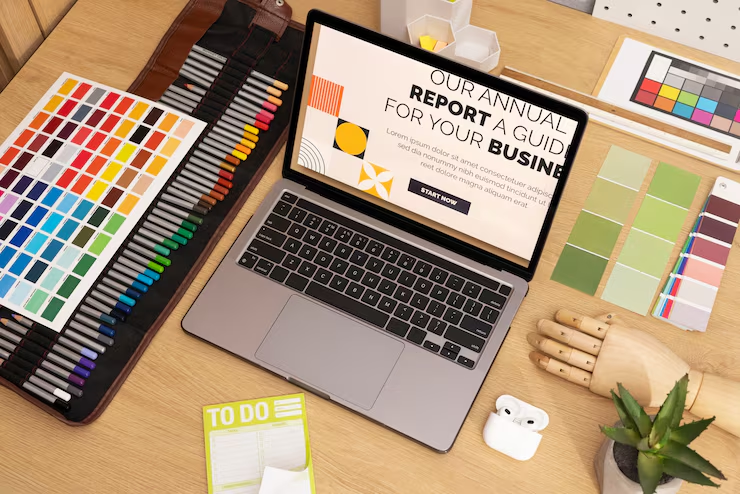
One of the most important lessons heading into 2026 is that consistency builds trust. Brands with fragmented visuals and inconsistent messaging struggle to create recognition and credibility. Unified design systems are becoming essential across websites, social platforms, products, and marketing assets.
Another critical insight is the shift toward digital-first branding. With most brand interactions happening online, design must prioritize responsiveness, accessibility, and clarity across devices. Visual identities that fail to translate well digitally risk losing relevance.
Finally, businesses are realizing that branding is an ongoing process, not a one-time project. Successful brands continuously evolve their design language while staying true to their core identity.
Design & Branding Trends to Watch in 2026
- Purpose-Driven Minimalism: Clean, intentional design focused on clarity, usability, and message over decoration.
- Adaptive Brand Systems: Flexible logos, color palettes, and layouts that scale across platforms and formats.
- AI-Assisted Design Workflows: Using AI tools to enhance speed, ideation, and consistency — without replacing creative direction.
- Bold Typography & Clear Hierarchy: Strong type choices that improve readability and reinforce brand personality.
- Authentic Visual Storytelling: Custom illustrations, photography, and motion elements that feel human and original.
- Accessibility-First Design: Designing for inclusivity, contrast, readability, and diverse user needs.
- Brand Experience Over Logos: Focusing on how users experience the brand, not just how it looks.
Conclusion
As 2026 approaches, graphic design and branding are becoming more strategic, more intentional, and more closely tied to business outcomes. Brands that treat design as a core part of their growth strategy — rather than a surface-level exercise — will gain a lasting competitive advantage.
The future belongs to brands that prioritize clarity, consistency, and adaptability. By embracing emerging trends while staying grounded in purpose, businesses can create identities that resonate today and remain relevant tomorrow.
At Mihiverse, we help businesses build branding and design systems that are not only visually compelling, but scalable, digital-ready, and aligned with long-term goals.


